P = IV = I²R = V²/R: Powerful Electrical Power 7 Facts 2026
Electrical power P = IV = I²R = V²/R in watts. Energy dissipated in resistors, efficiency, kilowatt-hours on electricity bills, and 4 worked examples.

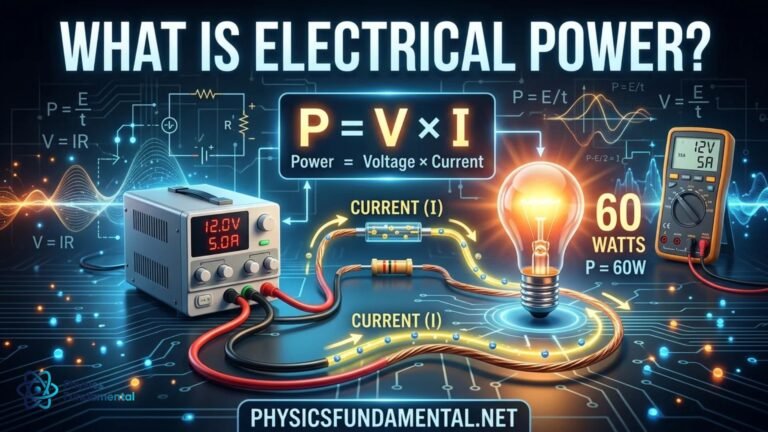
Electrical power P = IV = I²R = V²/R in watts. Energy dissipated in resistors, efficiency, kilowatt-hours on electricity bills, and 4 worked examples.

Have you ever wondered how a device can store electrical energy and release it when needed? A capacitor is one of the key components that makes this possible. It can store electric charge and energy, then release that stored energy into a circuit when required. So, what is capacitance? Capacitance is the ability of a…
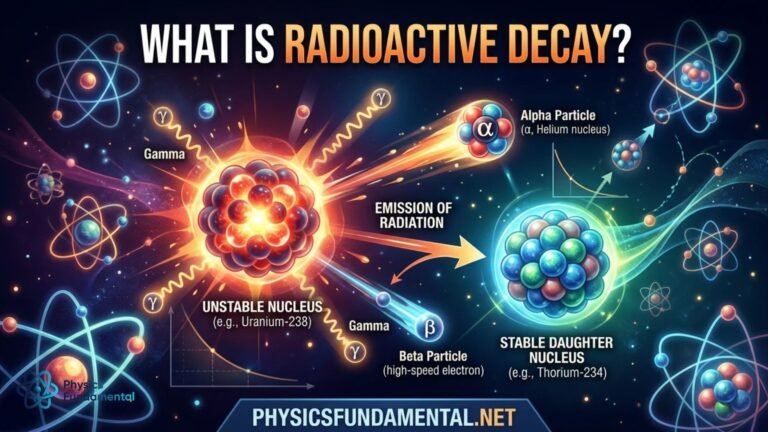
The three types of radioactive decay, how half-life actually works, and real applications from carbon dating to nuclear medicine, fully explained.
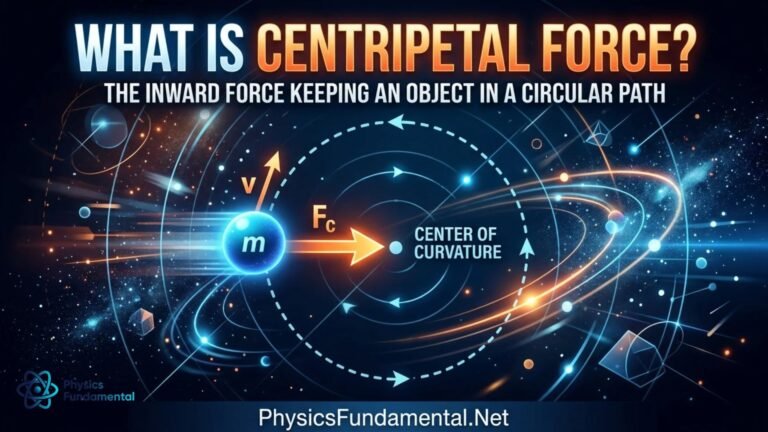
When a car turns around a corner, you may feel yourself pushed toward the outside of the turn. When a stone is tied to a string and swung in a circle, the string pulls the stone toward the center. These two experiences often create confusion: centripetal vs centrifugal force — which one is actually real?…
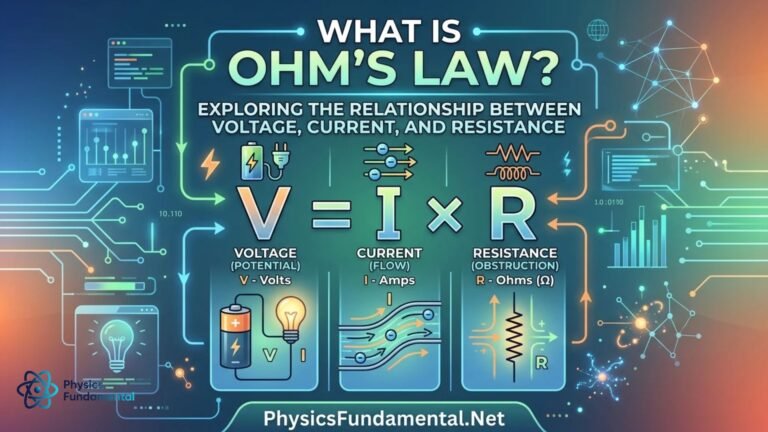
Why does a light bulb glow brighter when you increase the voltage? Why does a circuit draw more current when its resistance is reduced? These questions can be answered with one of the most important relationships in basic electricity: V = IR. Known as Ohm’s Law, the equation connects three fundamental electrical quantities: voltage, current,…
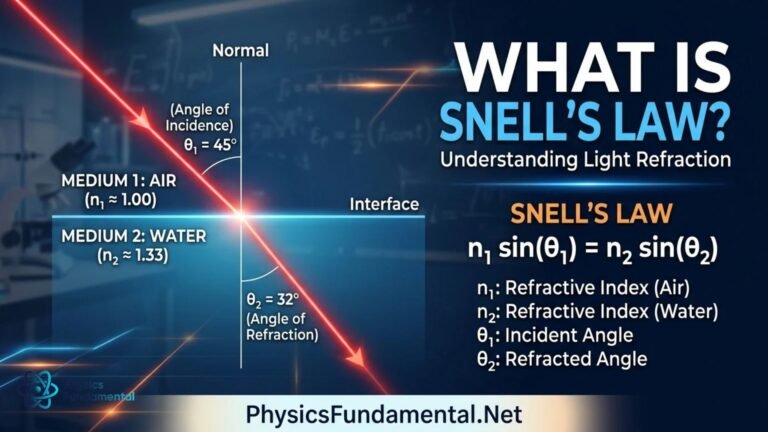
Snell’s law n₁sinθ₁ = n₂sinθ₂ explains refraction at boundaries. Refractive index, critical angle, total internal reflection, and fibre optics explained with worked examples.
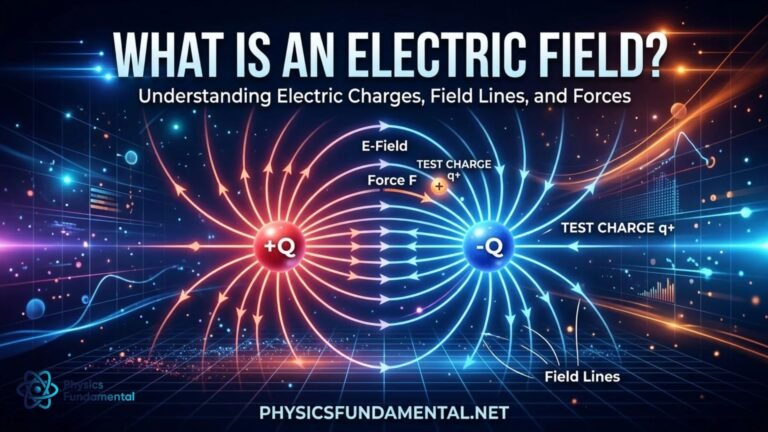
Electric charges can influence objects around them without physically touching them. A charged particle can push or pull another charge from a distance, and this interaction is described using two important concepts in electrostatics: electric field and electric potential. The electric field describes the force that a charge would experience at a particular location, while…
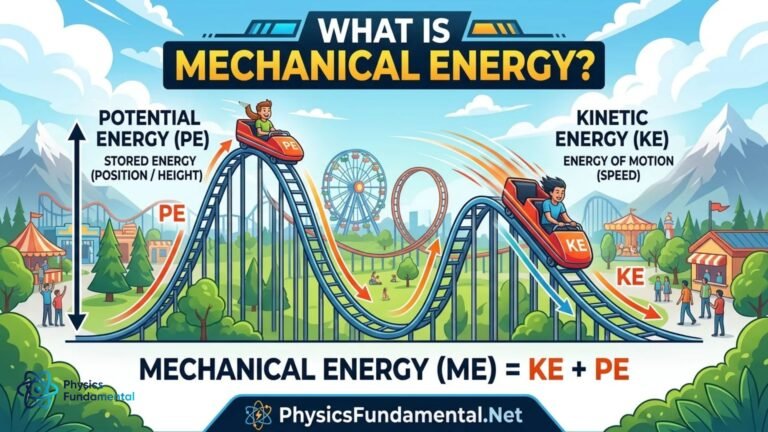
What happens to the energy of a roller coaster as it climbs a hill and then races downward? It does not simply disappear. Instead, energy shifts between different forms, especially kinetic energy and potential energy. This everyday example provides a simple way to understand mechanical energy. Mechanical energy is the energy an object has because…
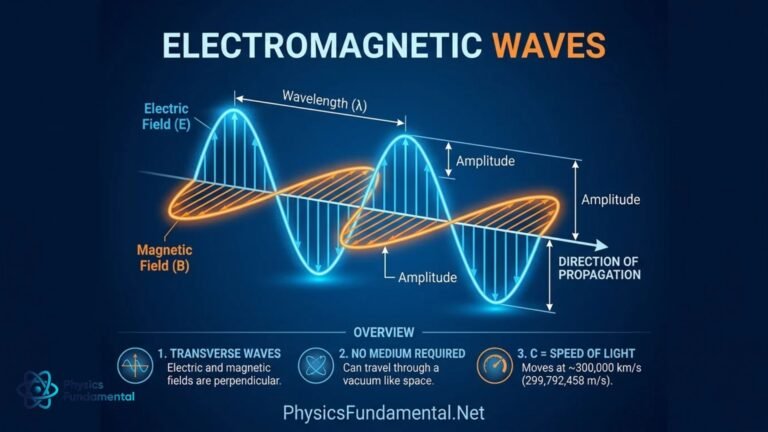
Light from the Sun, radio signals, Wi-Fi, X-rays, and microwaves may seem completely different, but they all belong to the same family: electromagnetic waves. These waves can travel through empty space without needing air, water, or another material medium. Electromagnetic waves are waves made of oscillating electric and magnetic fields that propagate through space. In…
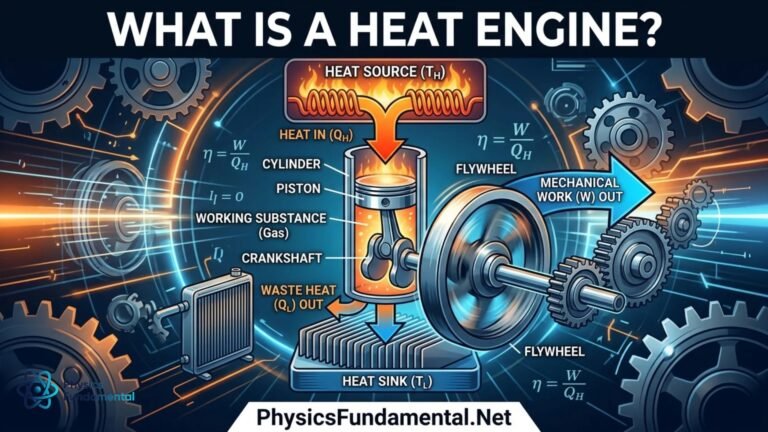
The Carnot cycle explained: maximum possible heat engine efficiency, eta = 1 – Tc/Th, the four-stage cycle, and why no real engine can beat it. Worked examples.